Compact Climate Control for Tiny Volumes
Managing heat, cooling, and moisture in densely insulated micro-environments.
The Micro-Climate Challenge
Tiny homes present a unique thermodynamics challenge. Because the total cubic volume of air is drastically lower than a standard dwelling, activities like boiling pasta, showering, or even human breathing rapidly alter the indoor humidity and temperature. This demands climate systems that are highly responsive but capable of extreme low-capacity throttling to prevent short-cycling.
Ductless Mini-Splits with Inverter Compressors
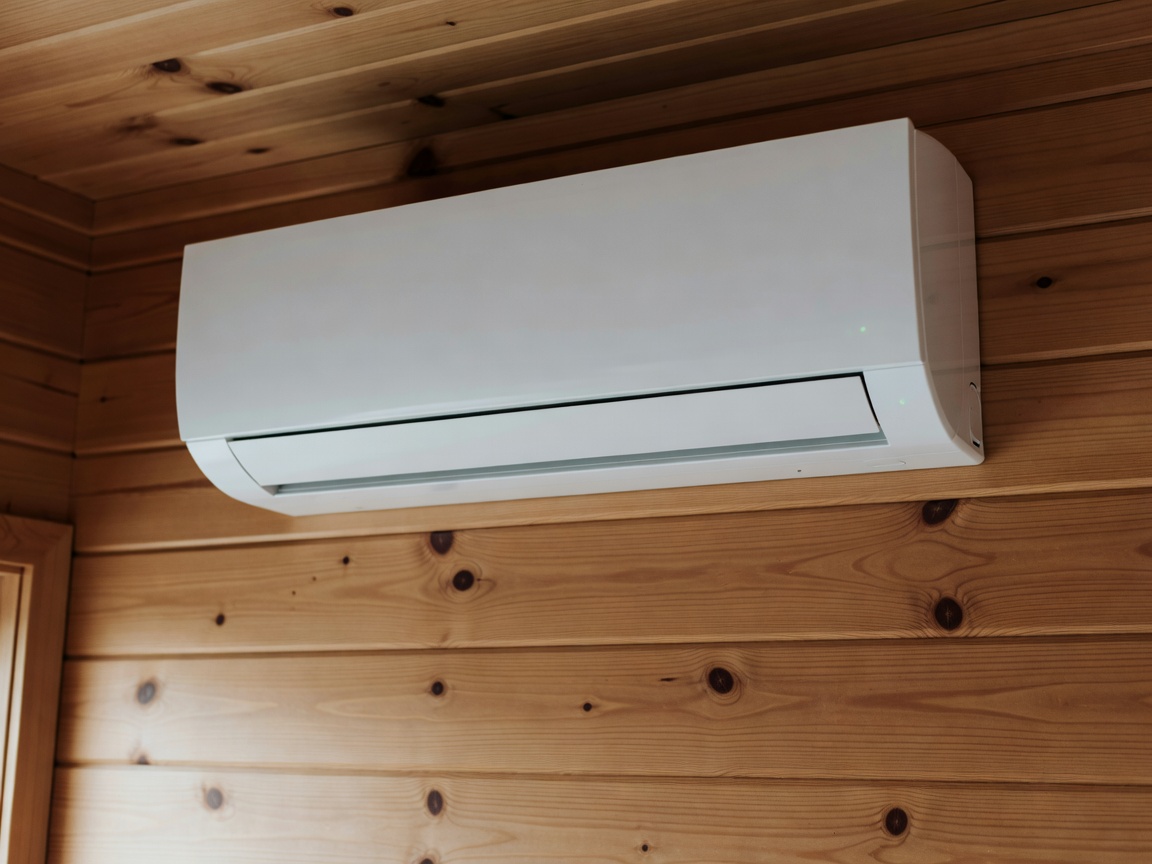
The gold standard for tiny home heating and cooling remains the ductless mini-split. However, a traditional unit is often oversized for a 300-square-foot space. The key is specifying a unit with a variable-speed inverter compressor.
Inverter systems do not just switch on and off; they modulate their output. In a tiny home, once the target temperature is achieved, an intelligent inverter dials down its capacity to maintain the temperature precisely, drawing merely hundreds of watts rather than thousands. Smart thermostats with IR blasters or native API integration allow these units to tie into global home automation systems.
Heat Recovery Ventilators (HRV/ERV)
Air sealing is critical in tiny home construction to maximize energy efficiency. The downside is trapped moisture and stale air. Given the small volume, CO2 levels spike quickly overnight when two people are sleeping in a closed loft.
Decentralized Heat Recovery Ventilators (HRVs) are compact, often through-wall units. They pull fresh air in while expelling stale air out, passing both streams through a ceramic core that exchanges heat. In winter, outgoing warm air pre-heats incoming freezing air. Modern smart HRVs monitor indoor air quality (IAQ) via integrated sensors, automatically boosting fan speeds if volatile organic compounds (VOCs) or CO2 thresholds are breached.
Pros
- Inverter mini-splits offer ultra-low electrical draw
- Through-wall HRVs eliminate bulky ductwork
- Smart systems detect humidity spikes automatically
- Rapid temperature adjustments due to small air volume
Cons
- Equipment often intrudes on minimal wall space
- External condenser units affect exterior aesthetics
- Systems can over-cool rapidly if poorly calibrated
Comparing Primary Heating Types
| System Type | Efficiency (COP) | Space Required | IoT Integration Level |
|---|---|---|---|
| Inverter Mini-Split Heat Pump | 3.0 - 4.5 | Wall block + Exterior unit | High (Native Wi-Fi / IR Control) |
| Radiant Electric Floor Heating | 1.0 | Zero (Subfloor) | Medium (Smart Thermostat required) |
| Direct Vent Propane Heater | 0.8 - 0.9 | Floor or low wall | Low (Often manual/millivolt only) |
Smart Automation Logic
Integrating these systems requires thoughtful automation logic. For instance, pairing a smart humidity sensor in the bathroom with the HRV ensures that when showering starts, the ventilation kicks into high gear without human intervention, preventing condensation on windows and potential mold growth within tight wall cavities.