Integrated Power Management
Maximizing limited electrical inputs through intelligent load balancing and battery storage.
The Grid Constraint
Tiny homes parked in backyards or RV parks are often restricted to a standard 30-amp or 50-amp shore power connection. Off-grid builds rely entirely on roof-mounted solar arrays that physically cannot exceed a certain square footage. In both scenarios, maximum power output is heavily constrained. Overloading the system trips breakers or drains batteries prematurely. This makes smart power management non-negotiable.
Smart Electrical Panels
Replacing traditional analog breaker boxes with smart electrical panels revolutionizes how energy is distributed. These panels monitor circuit-level consumption in real-time. Crucially, they can perform automated load-shedding. For example, if the system detects that the user has turned on the induction cooktop while the mini-split AC is running, the smart panel can automatically cut power to non-essential loads—such as the water heater or radiant floor heating—until the cooking session is over, preventing a total system overload.
Solar and Battery Integration
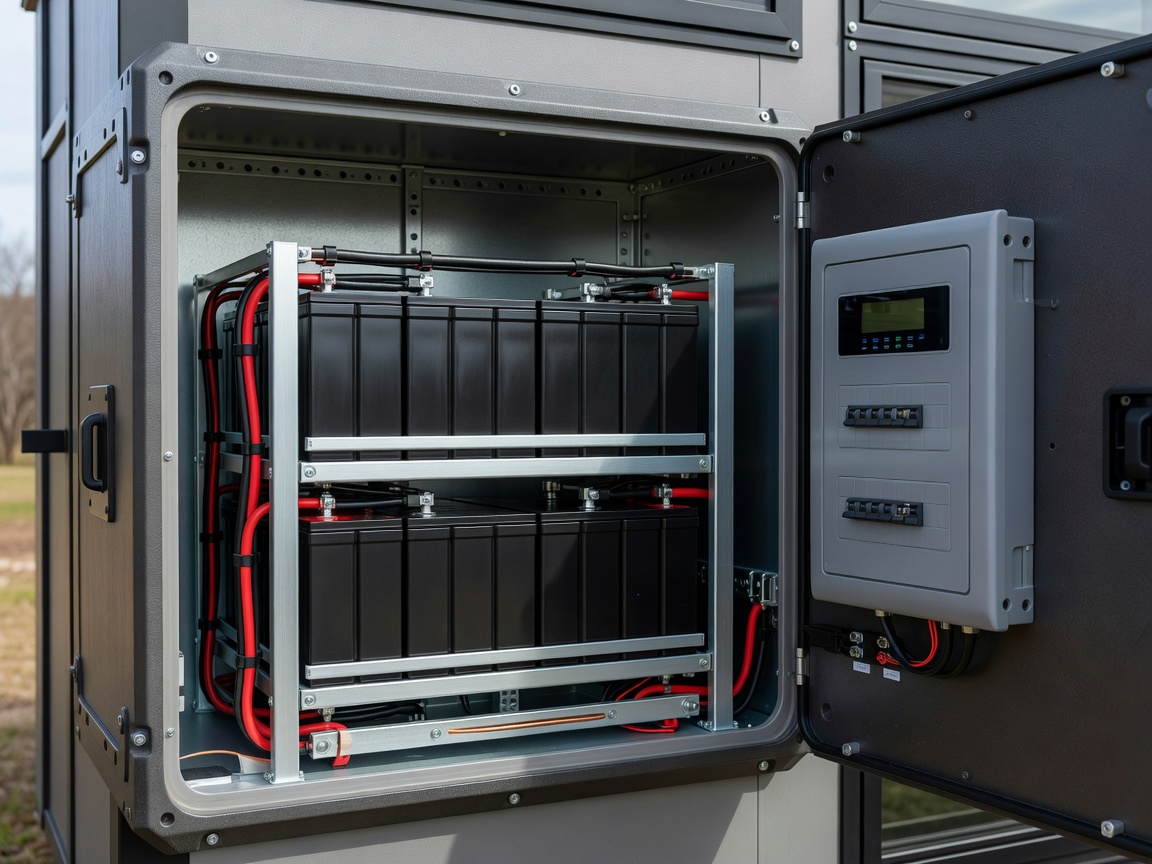
Lithium Iron Phosphate (LiFePO4) battery banks have become the standard for tiny homes due to their stable chemistry and deep discharge capabilities. Paired with hybrid micro-inverters, these systems can blend shore power and solar power seamlessly. If a tiny house is plugged into a limited 15-amp outlet, the inverter can "assist" heavy loads by drawing the delta from the battery bank, effectively delivering 30-amp performance from a 15-amp connection.
Pros
- Prevents nuisance breaker tripping via automated load shedding
- Allows high-draw appliance usage on limited connections
- Deep insights into personal energy consumption patterns
- Maximizes utilization of physically small solar arrays
Cons
- Smart panels are significantly more expensive than analog boxes
- Requires complex initial configuration and prioritizing of loads
- Reliance on software means firmware glitches can disable circuits
Circuit Prioritization Strategy
To set up an effective smart panel in a tiny home, users must categorize their circuits. Understanding the hierarchy prevents critical system failure during off-grid operations.
| Priority Level | Typical Connected Loads | Shedding Rule |
|---|---|---|
| Critical (Never Shed) | Refrigerator, Security, Main Hub, Water Pump | Maintain until battery reaches 5% |
| Essential (Shed as needed) | Mini-Split HVAC, Induction Cooktop, Lighting | Shed dynamically if total draw exceeds main breaker limit |
| Non-Essential (First to Shed) | Water Heater, Radiant Floors, Washer/Dryer | Shed immediately upon high-draw detection or low battery |