Smart Lighting in Tiny Homes: Zoning Small Spaces
Transforming 200 square feet through dynamic color temperature and intelligent zones.
The Psychology of Light in Small Spaces
In standard housing, physical walls separate functions. The bedroom is separated from the kitchen, which is distinct from the office. In tiny-home living, a single volume of space often serves all three purposes simultaneously. Smart lighting becomes the virtual divider, using color temperature and brightness to dictate the current function of the room.
Using interconnected LED systems managed via a central hub or direct Wi-Fi protocols, occupants can shift the entire mood of their micro-home instantly. By switching from stark 5000K task lighting to warm 2700K ambient glows, the space transitions seamlessly from a daytime workspace to a relaxing evening retreat.
Essential Components for Tiny Home Lighting
1. Recessed Low-Profile Downlights
Tiny homes generally have lower ceiling heights. Traditional pendant fixtures or deep recessed cans eat into valuable headroom and insulation space. Ultra-thin smart LED downlights can slide perfectly into shallow ceiling cavities. Because they integrate directly with smart home ecosystems, you can group them into distinct zones (e.g., "Kitchen Area", "Loft Area").
2. High-Density LED Strip Lighting
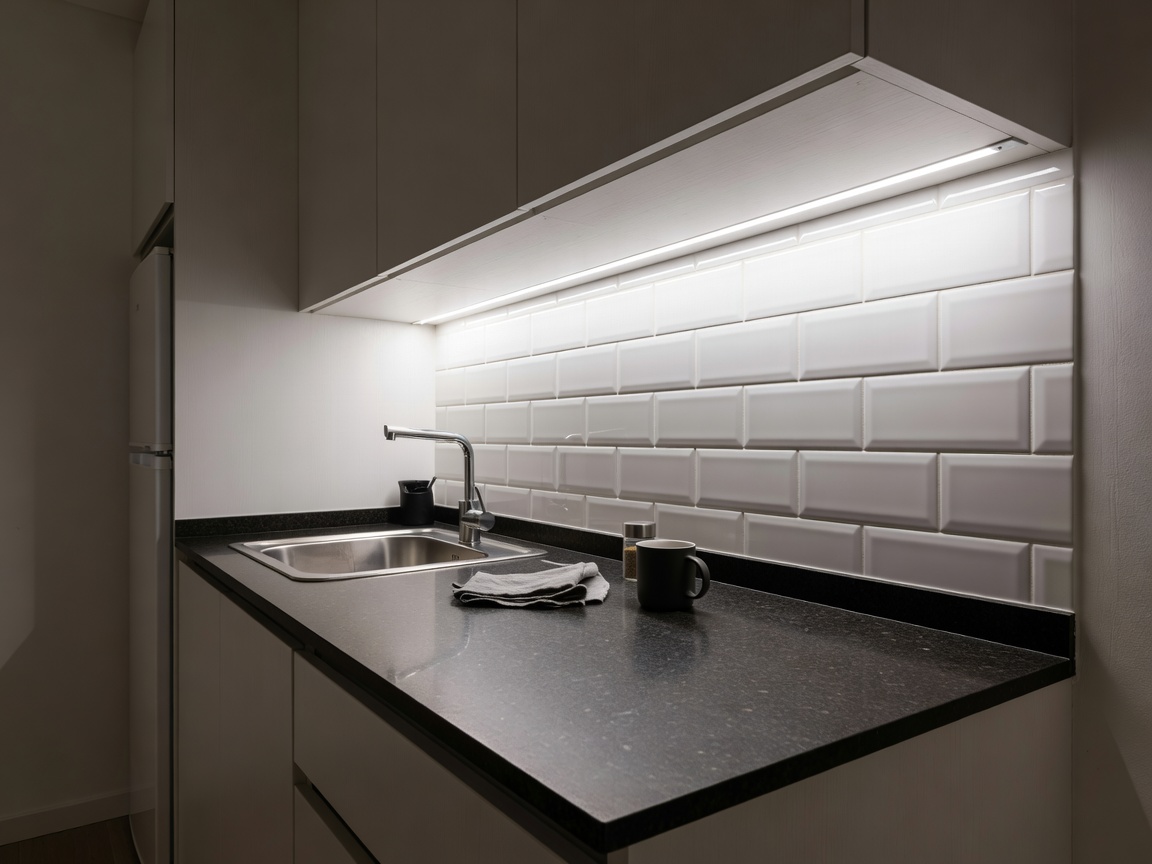
Instead of relying purely on overhead fixtures, which can make small spaces feel smaller by drawing attention to the ceiling height, indirect lighting is crucial. High-density COB (Chip on Board) LED strips offer smooth, dot-free illumination. Placed above cabinets, under toe-kicks, and behind loft ladders, they provide ambient wash lighting that visually pushes boundaries outward.
Pros
- Zero physical footprint, preserving ceiling height
- Tunable white ranges map to circadian rhythms
- Low DC power consumption, ideal for solar off-grid setups
- Creates psychological separation in open-plan spaces
Cons
- Requires constant "always-on" power for wireless receivers
- Can cause visual clutter if LED diodes reflect on glass
- Higher upfront cost than standard dumb switches
Technical Specifications: 12V DC vs. 120V/240V AC Systems
One of the primary decisions when outfitting a tiny house is whether to use traditional mains AC power or wire the lighting circuit on low-voltage DC. For off-grid capabilities, running smart lights on native 12V or 24V DC prevents the inverter from needing to run constantly, reducing parasitic power drain.
| Protocol | Power Consumption (Standby) | Reliability in Metal Frames | Best Use Case |
|---|---|---|---|
| Zigbee | Very Low (<0.5W) | Excellent (Mesh network) | Primary lighting circuits, large bulb counts |
| Wi-Fi | Moderate (~1W) | Variable (Interference prone) | Standalone accent lights, small builds |
| Thread / Matter | Low | Excellent (Mesh, local control) | Future-proof, mixed ecosystem setups |
Implementation Strategy
For a standard 20-foot tiny house build, start by dividing the layout into three distinct zones: overhead general lighting, mid-level task lighting (kitchen counters, desk spaces), and floor-level accent lighting (stair treads, toe-kicks). Utilize a smart hub that processes commands locally to ensure light switches function immediately, even if the primary internet connection is rural or unstable.